Post Office fun
I though that this might end up being a bit long for a Facebook post and
if I end up including a lot of photos and videos, maybe a bit much for
email, so I've sent you all a link to this web page.
Here's the story... because the members of the PiTrex team are all
in different countries, at this point before we're properly organised
for commercial sales, we are in the unfortunate position that the
main PCB is shipped from Australia and the shells from Texas - and you
have to find a Pi Zero somewhere on your own, so that's three sets of
shipping that frankly cost almost as much as the hardware you're buying.
In the long term we'll find a way to ship from the one place and reduce
shipping to the rate that you're accustomed to paying on any Vectrex
purchase, but for the moment I felt pretty bad about charging full USPS
parcel rates for a single cartridge shell and so for an experiment
with half a dozen willing volunteers I'm trying to work out the cheapest
shipping method I can find, and for this one-off experiment, I'll
ship at cost. We can work out payments when they arrive ... if they
arrive in once piece.
That's the why ... now the how...
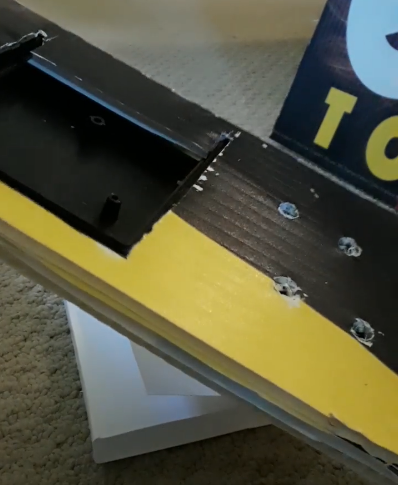 I started off looking at ways to see if I could send a shell in a regular letter envelope at letter rates,
and actually came up with a method that used a sandwich of cut-to-fit
coroplast slices to completely encapsulate the cartridge (split into
its two halves to keep the thickness down). That would have worked,
but then I found out that there's a 1/4in thickness limit on regular
envelopes.
I started off looking at ways to see if I could send a shell in a regular letter envelope at letter rates,
and actually came up with a method that used a sandwich of cut-to-fit
coroplast slices to completely encapsulate the cartridge (split into
its two halves to keep the thickness down). That would have worked,
but then I found out that there's a 1/4in thickness limit on regular
envelopes.
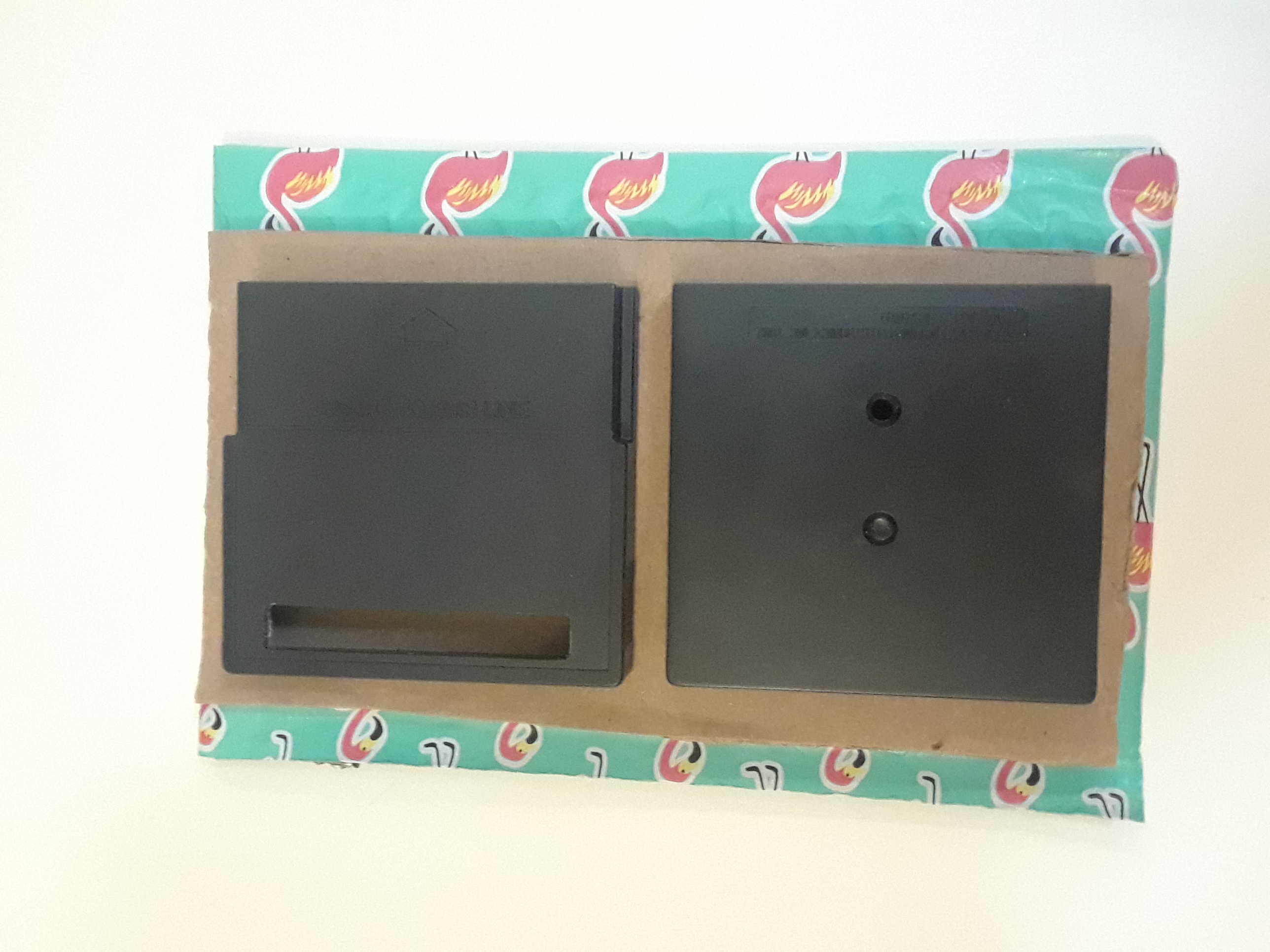 So since that was exceeded anyway, and the next boundary
was on 3/4in, I switched to using padded bubble mailers (that were the
same shape as regular letters).
So since that was exceeded anyway, and the next boundary
was on 3/4in, I switched to using padded bubble mailers (that were the
same shape as regular letters).
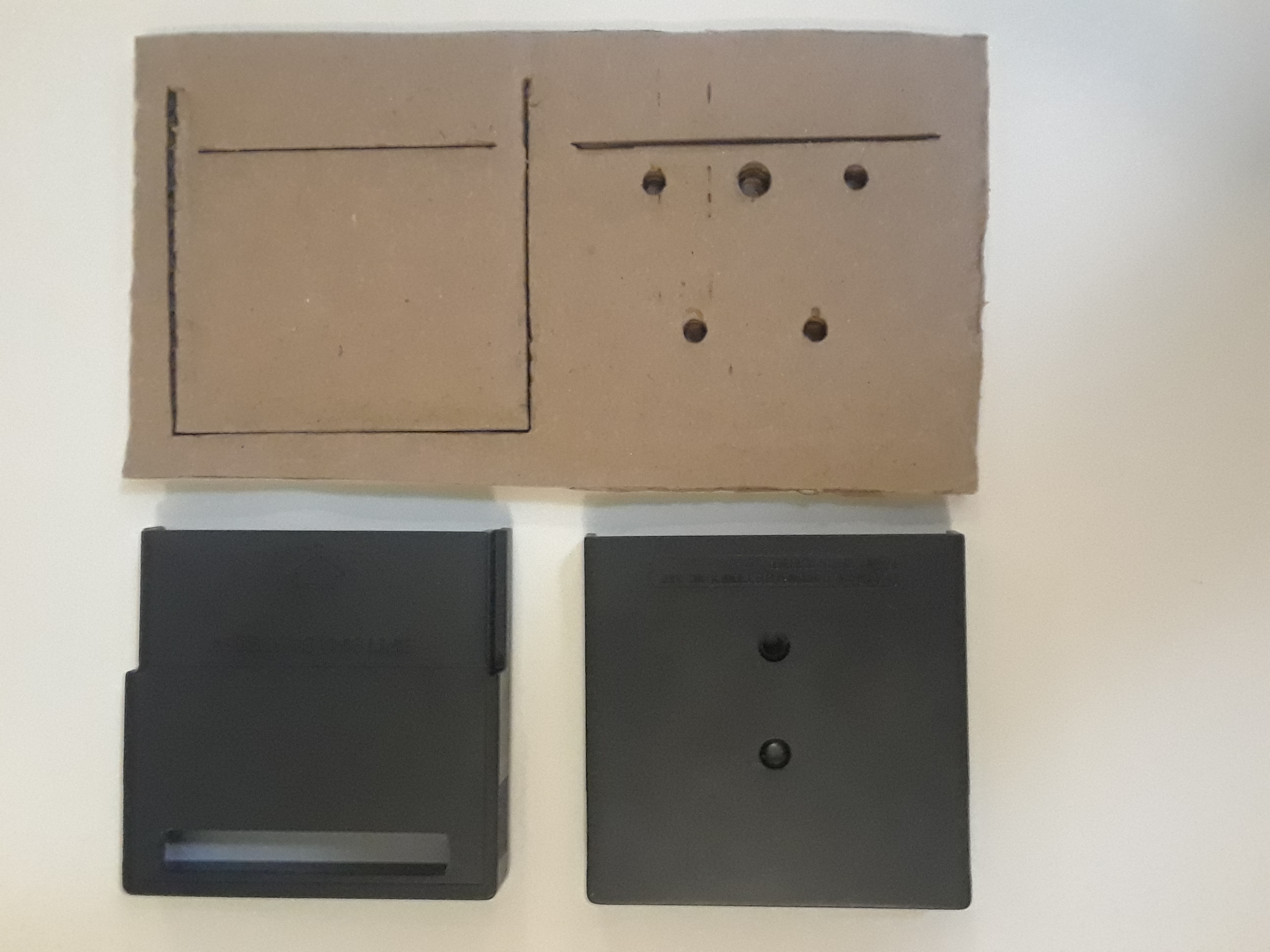 With that, only one layer of stiffening
was needed, and I switch from cutting coroplast with a CNC mill to
cutting cardboard with a laser. (btw the coroplast came from discarded
election garden signs, and the cardboard was from shipping boxes such
as Amazon, of which we have more than the normal amount at the moment
due to Covid lockdown... So you can either look on that as being
environmentally friendly or just being cheap; either one fits...)
With that, only one layer of stiffening
was needed, and I switch from cutting coroplast with a CNC mill to
cutting cardboard with a laser. (btw the coroplast came from discarded
election garden signs, and the cardboard was from shipping boxes such
as Amazon, of which we have more than the normal amount at the moment
due to Covid lockdown... So you can either look on that as being
environmentally friendly or just being cheap; either one fits...)
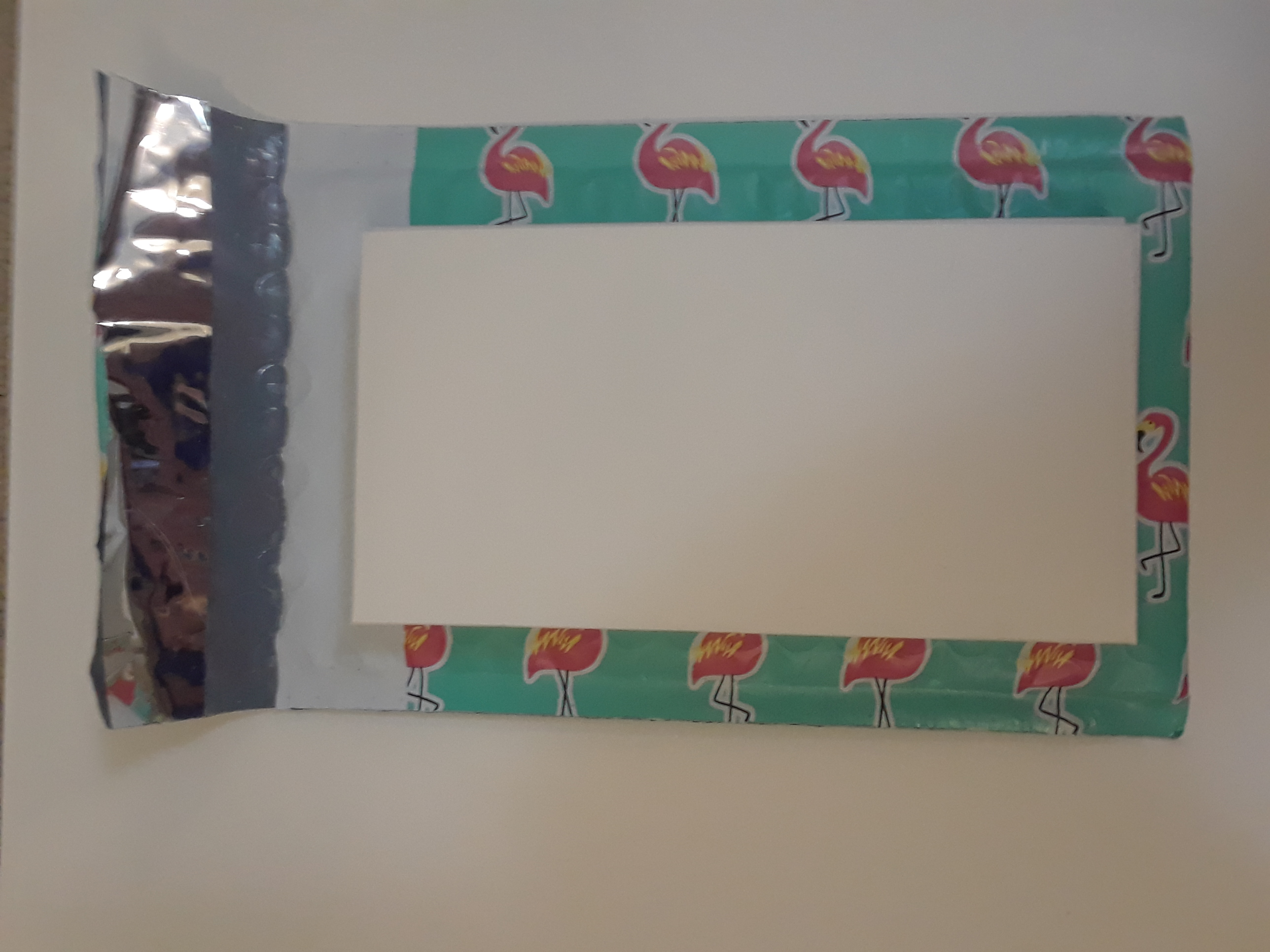 I also tried some 'paper craft' folding of card stock neatly around
the two shell halves, which worked pretty nicely too. I had planned
to try sending all three types of packaging and see which ones
survived the trip best.
I also tried some 'paper craft' folding of card stock neatly around
the two shell halves, which worked pretty nicely too. I had planned
to try sending all three types of packaging and see which ones
survived the trip best.
Then the trouble started... I actually went to the effort of reading
the postal regulations. It turns out that there are a few considerations
which cause them to reclassify something that looks like a letter as a
parcel instead. Size is an obvious one... but we're good there ... the
bubble mailers are within the size limits ... but the killer is 'rigidity'.
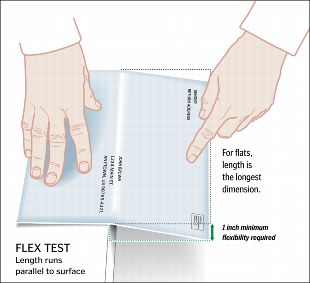 You are supposed to be able to bend the envelope across the center line
in both the horizontal and vertical axes, and the end has to bend in by
at least one inch. Clearly something whose entire height is taken up by
a side of a Vectrex shell is not going to bend in that direction, even
though it might bend on the other axis in the gap between the two shell
halves.
You are supposed to be able to bend the envelope across the center line
in both the horizontal and vertical axes, and the end has to bend in by
at least one inch. Clearly something whose entire height is taken up by
a side of a Vectrex shell is not going to bend in that direction, even
though it might bend on the other axis in the gap between the two shell
halves.
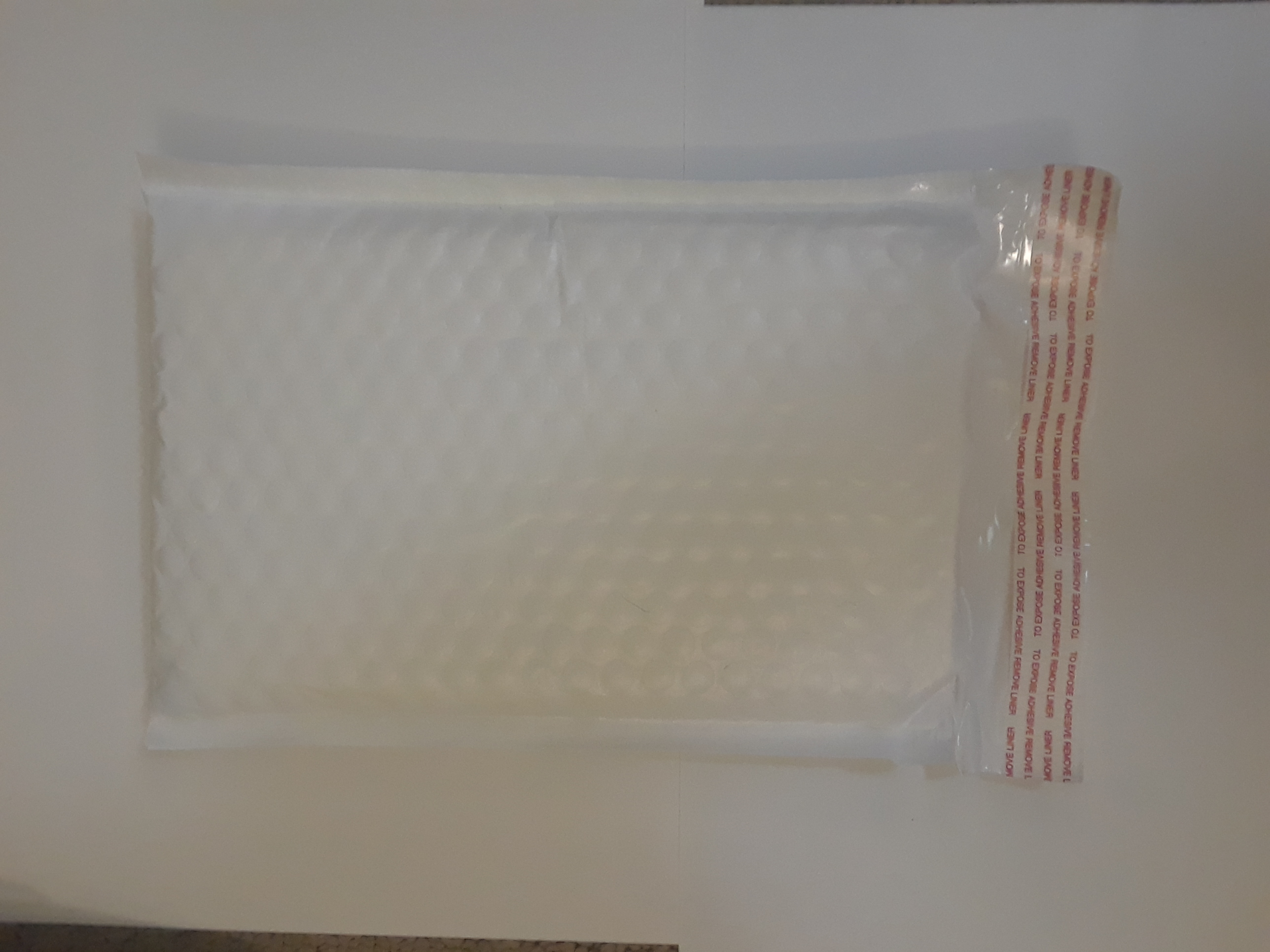 But then I had another idea... by switching up one size of envelope,
from regular to what the Post Office calls 'large envelope',
But then I had another idea... by switching up one size of envelope,
from regular to what the Post Office calls 'large envelope',
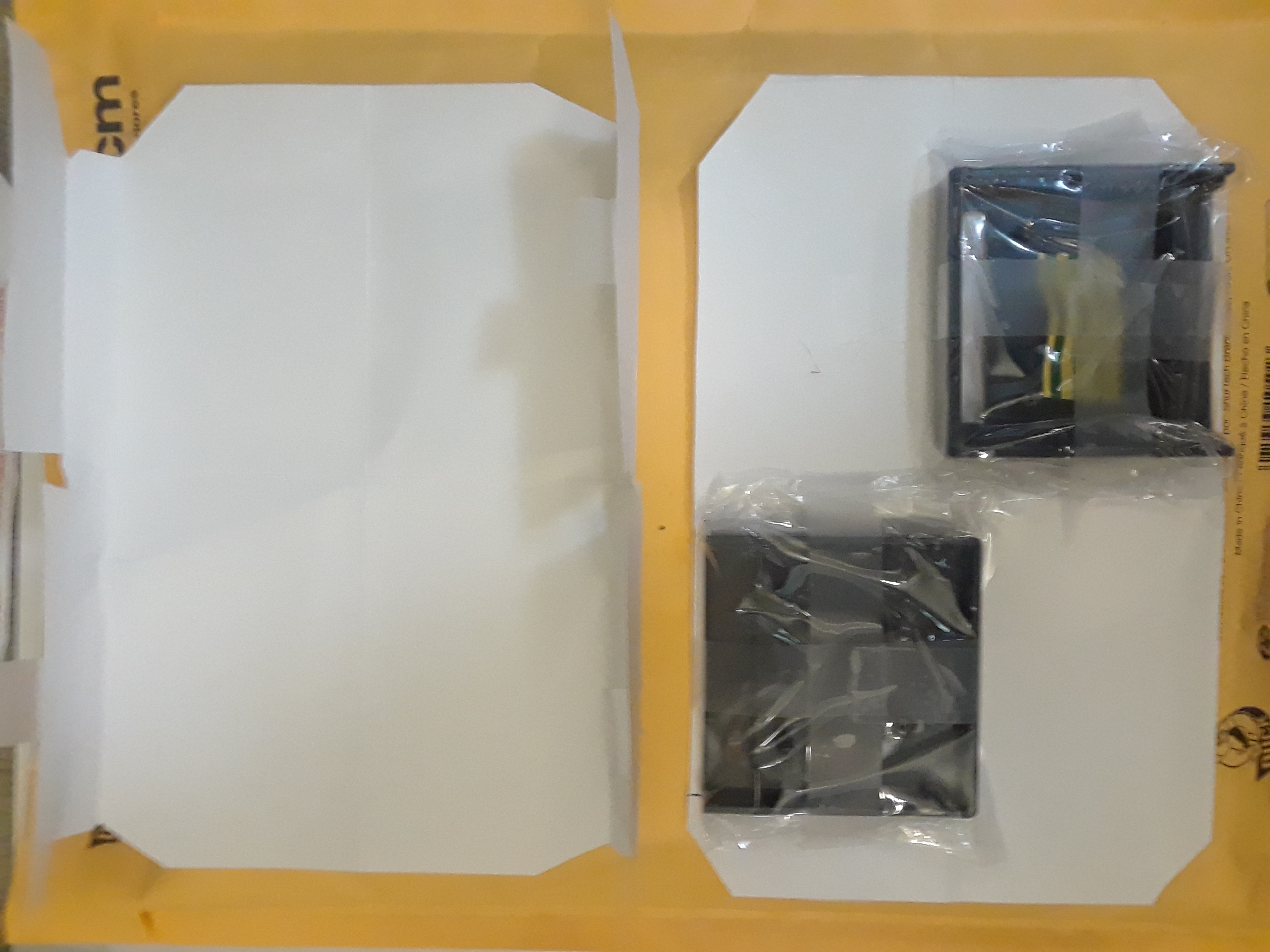 I could
position the two shell halves at diametrically opposite corners, leaving
room to bend the mailer envelope and pass the rigidity test. There's a
slight increase for 'large envelope' format and a slight surcharge for
weight in some cases, but those are trivial in comparison to parcel
rates. And note that parcel rates would apply to the same lightweight
envelopes - we're not talking about big cardboard boxes here.
I could
position the two shell halves at diametrically opposite corners, leaving
room to bend the mailer envelope and pass the rigidity test. There's a
slight increase for 'large envelope' format and a slight surcharge for
weight in some cases, but those are trivial in comparison to parcel
rates. And note that parcel rates would apply to the same lightweight
envelopes - we're not talking about big cardboard boxes here.
mind you, there's still a catch - the package is supposed to be of
roughly equal thickness throughout, so I've also padded the other two
corners of the package with foam or bubble-wrap as available.
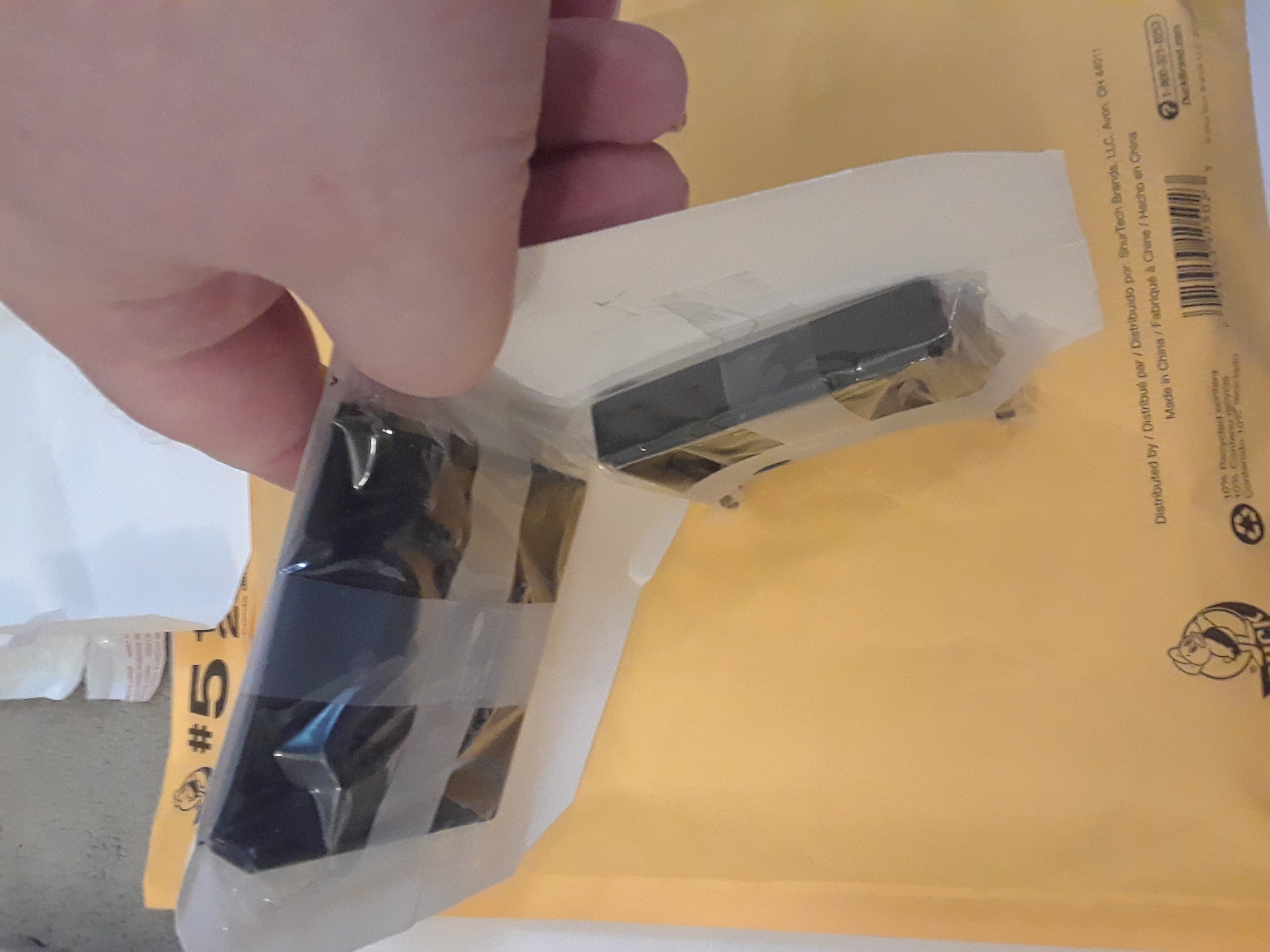
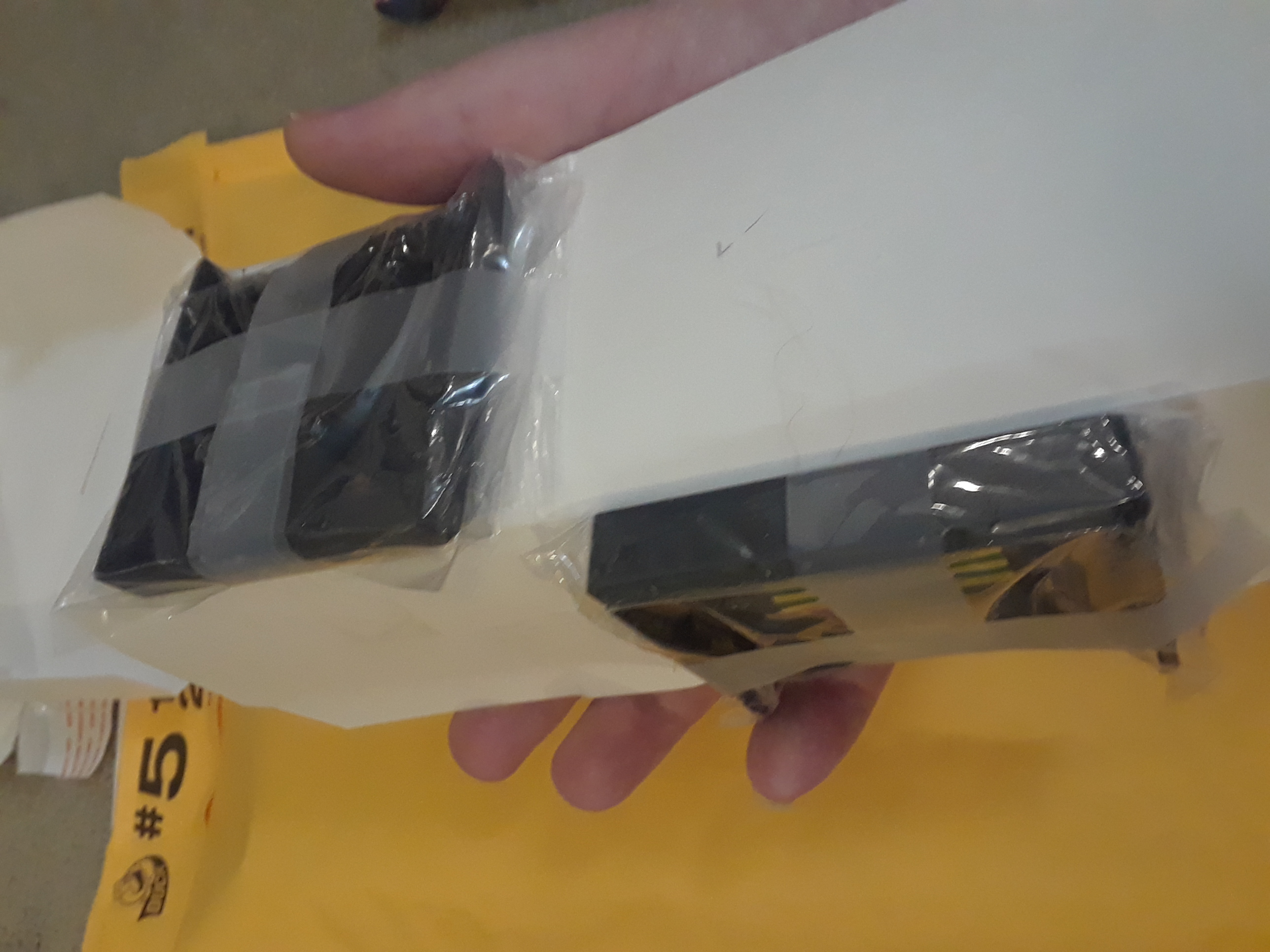 So that's where I'm at now... I've packaged everything up in larger
bubble-mailers, I've tested by folding a little in both directions,
and as far as I can tell from a close reading of the Post Office regs,
there's no remaining justification for them to categorise these as
parcels.
So that's where I'm at now... I've packaged everything up in larger
bubble-mailers, I've tested by folding a little in both directions,
and as far as I can tell from a close reading of the Post Office regs,
there's no remaining justification for them to categorise these as
parcels.
Rates
For US mail,
- First-Class Mail Flat/Large Envelope (3 oz.) $1.40
- First class package service $3.80+
- USPS Retail ground, Prices start $7.50
- Small flat rate box $8.30
For International mail,
- First-Class Mail International Flat/Large Envelope (3oz) $4.37
- First class package International service $12.25+
(From https://pe.usps.com/text/Imm/tz_018.htm)
First-Class Mail International (240) Price Group 5


Refer to Notice 123, Price List, for the applicable retail price:
                     	https://pe.usps.com/text/dmm300/Notice123.htm#_c334

		First-Class Mail International
		Retail Large Envelopes (Flats)

		                       Price Groups
		Weight Not Over  1         2          3-5        6-9
		    (oz.)       Canada   Mexico
		     1	      $2.40	$2.40     $2.40 	$2.40
		     2	       2.63	 3.12      3.39 	 3.34
		     3	       2.85	 3.82      4.37 	 4.26
		     4	       3.06	 4.54      5.36 	 5.19
		     5	       3.28	 5.25      6.34 	 6.12
		     6	       3.50	 5.95      7.32 	 7.05
		     7	       3.72	 6.67      8.31 	 7.98
		     8	       3.94	 7.38      9.29 	 8.90
		    12	       5.03	 8.90     11.26 	10.83
		 15.994	       6.12	10.44     13.23 	12.74

		Pieces that are rigid, nonrectangular, or not uniformly thick pay package prices.

Weight Limit: 3.5 oz. for letters and postcards; 15.994 oz. for large envelopes (flats).
Regs
240 First-Class Mail International
The First-Class Mail International classification encompasses all categories of international mail that before May 14, 2007, were categorized as airmail letter-post and economy letter-post, postcards, printed matter, and small packets that were formerly categorized as LC (letters and cards) and AO (other articles).
The weight limit for a letter-size First-Class Mail International mailpiece is 3.5 ounces. Letter-size items exceeding 3.5 ounces are charged the First–Class Mail International flat-size price.
Letter-size mail must be rectangular and must meet the following dimensions:
- Not less than 5-1/2 inches long or 3-1/2 inches high or 0.007-inch thick.
- Not more than 11-1/2 inches long or 6-1/8 inches high or 1/4-inch thick.
Note: For the purpose of determining mailability or machinability of a letter-sized piece, the length is the dimension parallel to the delivery address as read, and the height is the dimension perpendicular to the length.
Light-colored envelopes that do not interfere with the reading of the address and postmark must be used. Brilliant colored envelopes are not authorized.
Envelopes and packaging materials must be constructed to be strong enough to withstand normal handling. Highly glazed paper or paper with a design that affects readability or processing is not acceptable.
Envelopes and cards that have green bars or red- and blue-striped borders may be used for the sending of First-Class Mail International items.
Address windows for letter-size envelopes must be used under the following conditions:
- The address window must be parallel with the length of the envelope and must be in the lower portion of the address side.
- Nothing but the name, address, and any key number used by the mailer may appear through the address window.
- The return address should appear in the upper-left corner. If there is no return address and the delivery address does not show through the window, the piece is handled as undeliverable mail.
- The address disclosed through the window must be on white paper or paper of a very light color.
- When used for Registered Mail, window envelopes must conform to the conditions in DMM 503.
- All window envelopes for international mail must include a transparent material covering the window opening — i.e., open-panel envelopes are not acceptable.
Regardless of a letter’s weight, a per-piece surcharge (see Notice 123, Price List) applies to a First-Class Mail International letter that is nonmachinable for any of the following reasons:
- Has an aspect ratio (length divided by height) of less than 1.3 or more than 2.5.
- Is polybagged, polywrapped, or enclosed in any plastic material.
- Has clasps, strings, buttons, or similar closure devices.
- Contains items such as pens, pencils, or loose keys or coins that cause the thickness of the mailpiece to be uneven.
- Is too rigid (does not bend easily when subjected to a transport belt tension of 40 pounds around an 11-inch diameter turn).
- Is more than 4-1/4 inches high or 6 inches long and less than 0.009 inch thick.
- Has a delivery address parallel to the shorter dimension of the mailpiece.
Each postcard claimed at a card price must be rectangular and must meet the following dimensions:
- Not less than 3-1/2 inches high or 5-1/2 inches long or 0.007 inch thick.
- Not more than 4-1/4 inches high or 6 inches long or 0.016 inch thick.
Note: Unenclosed cards exceeding the size limits for postcards are mailable at the First-Class Mail International letter price if they do not exceed 4-3/4 inches high or 9-1/4 inches long.
Light-colored cards that do not interfere with the reading of the address and postmark must be used. Brilliant colored cards are not authorized.
Cards must be constructed to be strong enough to withstand normal handling. Highly glazed card stock or card stock with a design that affects readability or processing is not acceptable.
To claim the card price, postcards must meet the following conditions:
- Postcards must consist of single cards sent without a wrapper or envelope.
- Privately manufactured postcards, except picture postcards, must bear the heading “Postcard.”
The right half of the address side of a card must be reserved for the address of the addressee and postal notations or labels.
The left half of the address side of the card and the reverse side can be used for a message or permissible attachments. If a return address is used, it must appear in the upper-left half of the address side.
The following attachments may be applied to a postcard as noted, provided the attachment is made of paper or other thin material and adheres completely to the card:
- To the left half or the back side of the card: clippings of any kind, illustrations or photographs, or labels other than address labels.
- Only to the back side of the card: stamps likely to be confused with postage stamps.
- Only to the address side of the card for addressing purposes: address labels.
The following attachments to a card are not acceptable:
- An attachment that is not made of paper.
- An attachment that does not totally adhere to the card surface.
- An attachment that is an encumbrance to postal processing.
Folded (double) cards must be mailed in envelopes at the First-Class Mail International letter price.
The weight limit for a First-Class Mail International large envelope (flat) is 4 pounds.
Large envelopes (flats) must meet the following dimensions and characteristics:
- More than 11-1/2 inches long or 6-1/8 inches high or 1/4-inch thick.
- Not more than 15 inches long or 12 inches high or 3/4-inch thick.
- Flexible (see 241.236).
- Rectangular.
- Uniformly thick as stated in 241.235.
Note: The length of a large envelope (flat) is the longest dimension. The height is the dimension perpendicular to the length. A First-Class Mail International large envelope (flat) that does not meet the standards in 241.23 correct is not eligible for the large envelope (flat) size price and is charged the applicable package (small packet) price.
Light-colored envelopes that do not interfere with the reading of the address and postmark must be used. Brilliant colored envelopes are not authorized.
Flats must be constructed to be strong enough to withstand normal handling. Highly glazed paper or paper with a design that affects readability or processing is not acceptable.
Large envelopes (flats) must be uniformly thick so that any bumps, protrusions, or other irregularities do not cause more than a 1/4-inch variance in thickness. When determining variance in thickness, exclude the outside edges of a mailpiece (1 inch from each edge) when the contents do not extend into those edges. Also, exclude the selvage of any polywrap covering from this determination. Mailers must secure nonpaper contents to prevent shifting of more than 2 inches within the mailpiece if shifting would cause the piece to be nonuniform in thickness or would result in the contents bursting out of the mailpiece.
Large envelopes (flats) must be flexible. Boxes with or without hinges, gaps, or breaks that allow the piece to bend are not considered large envelopes (flats). Tight envelopes or wrappers that are filled with one or more boxes are not considered large envelopes (flats). Customers have the option to perform the tests described below and illustrated in Exhibit 241.236a–Exhibit 241.236c on their own mailpieces. When a Postal Service employee observes a customer demonstrating that a flat-size piece is flexible according to these standards, the employee does not need to perform the test. Test flats as follows:
- All large envelopes (flats) (see Exhibit 241.236a):
- Place the piece with the length parallel to the edge of a flat surface and extend the piece halfway off the surface.
- Press down on the piece at a point 1 inch from the outer edge, in the center of the piece’s length, exerting steady pressure.
- The piece is not flexible if it cannot bend at least 1 inch vertically without being damaged.
- The piece is flexible if it can bend at least 1 inch vertically without being damaged and does not contain a rigid insert. No further testing is necessary.
- If the piece can bend at least 1 inch vertically without being damaged but contains a rigid insert, test the piece according to 241.236b or 241.236c.
Exhibit 241.236a
Flexibility Test — All Large Envelopes (Flats)
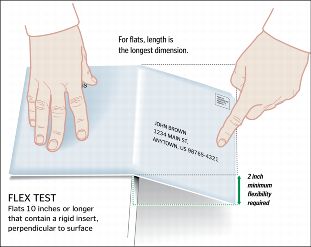
Large envelopes 10 inches or longer that demonstrate the required flexibility in 241.236a but that contain a rigid insert (see Exhibit 241.236b):
- Place the piece with the length perpendicular to the edge of a flat surface and extend the piece 5 inches off the surface.
- Press down on the piece at a point 1 inch from the outer edge, in the center of the piece’s width, exerting steady pressure.
- Turn the piece around and repeat steps 1 and 2. The piece is flexible if both ends can bend at least 2 inches vertically without being damaged.
Exhibit 241.236b
Flexibility Test — Large Envelopes (Flats) 10 Inches or Longer
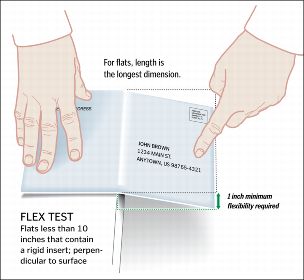
- Large envelopes less than 10 inches long that demonstrate the required flexibility in 241.236a but that contain a rigid insert (see Exhibit 241.236c):
- Place the piece with the length perpendicular to the edge of a flat surface and extend the piece halfway off the surface.
- Press down on the piece at a point 1 inch from the outer edge, in the center of the piece’s width, exerting steady pressure.
- Turn the piece around and repeat steps 1 and 2. The piece is flexible if both ends can bend at least 1 inch vertically without being damaged.
Exhibit 241.236c
Flexibility Test — Large Envelopes (Flats) Less Than 10 Inches Long
The weight limit for a First-Class Mail International package (small packet) is 4 pounds.
241.242 Dimensions — Other Than Rolls
Packages (small packets) other than rolls must be within the following dimensions:
- Maximum length: 24 inches. Length is the longest dimension.
- Maximum length, height, and depth (thickness) combined: 36 inches.
- Minimum size: Large enough to accommodate the postage, address, customs form, and other required elements on the address side.
Rolls must be within the following dimensions:
- Minimum length: 4 inches.
- Minimum length plus twice the diameter combined: 6-3/4 inches.
- Maximum length: 36 inches.
- Maximum length plus twice the diameter combined: 42 inches.
Packages (small packets) must be constructed to be strong enough to withstand normal handling.